Diabetes affects every part of the body including hair. From birth, large parts of the human body are covered in hair. Most of these are tiny colourless hairs called vellus hairs.
Thicker, longer and coloured hairs called terminal hairs are found on the head, eyebrows and lashes. During puberty, hormonal changes cause some vellus hairs to become terminal hairs forming the beard ,underarm and genital hairs.
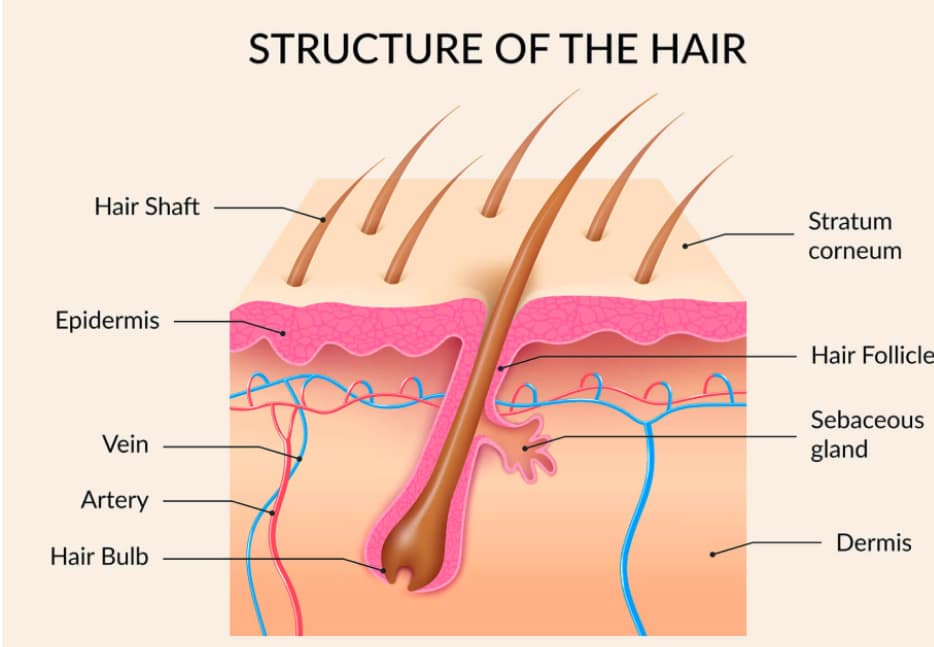
Hair is made up of two distinct parts ,the hair follicle and the hair shaft.
The hair follicle
The hair follicle is the living part of the hair, found under the skin. It is a tube-like structure responsible for growing hair. Humans have about 5 million hair follicles, and a hundred thousand (100 000) of those are found on the head.
For hair to grow the follicles depends on good blood flow, healthy nerves and hormones. Good blood flow provides the follicle with oxygen and nutrients.
The hair shaft.
The hair shaft is the part of the hair that you see above the skin. It is the dead or non-living part of the hair. That is why cutting your hair is painless but pulling your hair is not.
Hair Growth Cycle
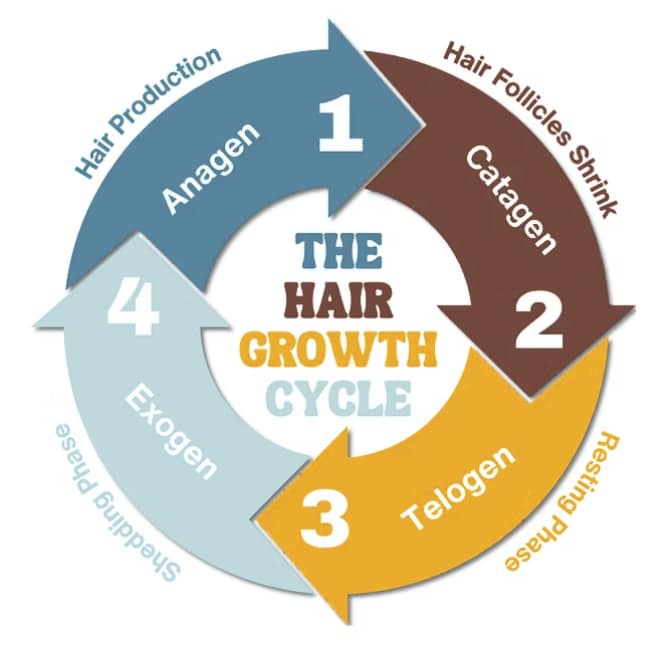
Hair grows in a continuous cycle. Each hair follicle moves through four main phases, and each phase plays an important role.
- Anagen (The Growth Phase)
This is the active growth stage and usually lasts for 2-6 years. During this phase hair grows by about 1cm a month. Hair gets its colour during this phase.
The length of your anagen phase is affected by your genes. A longer anagen phase means longer hair and a shorter anagen phase results in shorter hair.
Almost 85–90% of scalp hairs are in the Anagen at any time.
- Catagen ( The Transition Phase)
This is the second phase of the hair growth cycle, it happens when the hair moves from a growing phase to a resting phase. This phase lasts for about 2-3 weeks.
During this phase, growth stops and your hair detaches from your blood supply. At least 1% of scalp hair are in this phase.
- Telogen ( The Resting Phase)
Telogen phase is the rest before new growth starts. During this phase the follicle is quiet, and no new hair is made. During this phase hair sheds or falls out of your hair follicle.
Hormonal changes, stress and nutritional changes push more hairs into this phase resulting in hair shedding.
This phase lasts for 2-3 months .About 10-15% of scalp hair are in the telogen phase.
- Exogen (The Shedding Phase)
Exogen phase is the reason why you see hair on your comb or brush. During this phase shedding is active. One loses about 100-200 hairs a day.
Each hair follicle follows its own cycle. This helps stop all your hair from falling out at the same time. The hair cycle is controlled by hormones, growth signals, nerves, and blood supply. These can be affected by diabetes, stress, illness, and nutrition.
How Diabetes affects your hair.
High blood glucose levels cause damage to small blood vessels. Also known as microvascular damage. Microvascular damage leads to kidney and eye damage and can also affect hair.
Damage to blood vessels affects blood supply to the hair follicles, depriving the hair follicle of oxygen and nutrients.
Less oxygen to the hair follicle causes :
- Thinning of hair
- Slow growth
- Fragile hair
- Patchy hair
- Increased shedding (hair loss).
Insulin Resistance and Balding
Some studies have found a link between insulin resistance and hair loss. Insulin resistance means the body is not responding to insulin as it should.
This affects blood sugar levels, hormones, and blood flow to the hair follicles. When hair follicles do not get the support they need, hair may become thinner, grow more slowly, or shed more easily over time.
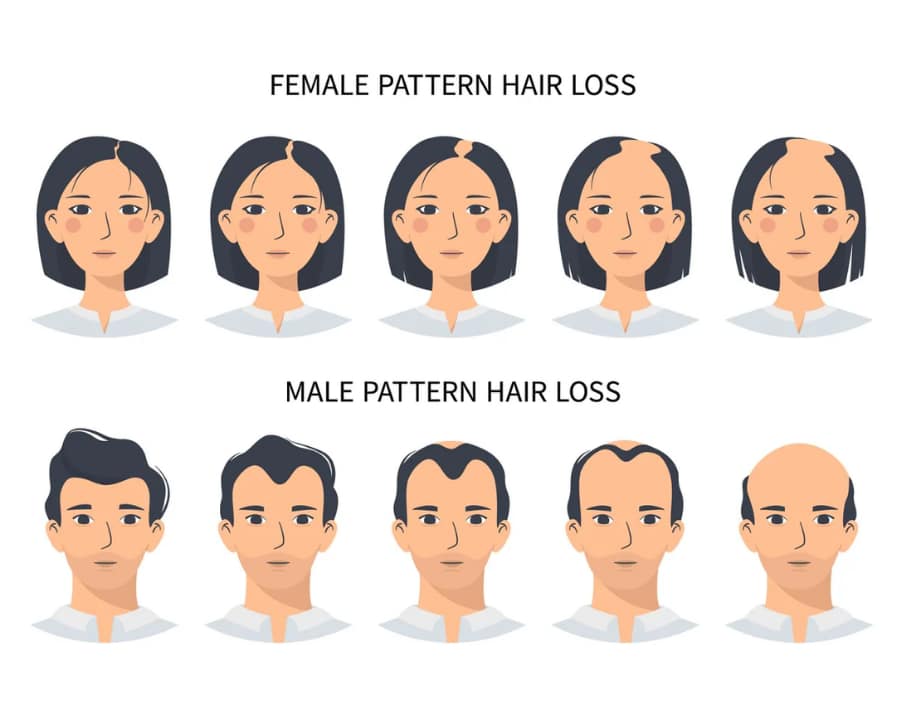
This can worsen male and female pattern hair loss.
Hair loss on the legs.
Loss of hair on the legs can happen in people with diabetes when blood flow to the legs and feet is reduced. This can be a sign of Peripheral Artery Disease (PAD).
Poor circulation means the skin and hair follicles are not getting enough oxygen and nutrients, causing leg hair to become thin or stop growing.
People living with diabetes should let their healthcare providers know if this happens, especially if they also experience cold feet, pain when walking, numbness, shiny skin, or wounds that heal slowly.
Vitamin 12 Deficiency
Vitamin B12 is important for healthy nerves, blood cells, and hair follicles. Low vitamin B12 levels may contribute to hair thinning or increased shedding.
Metformin, a common medicine used to treat type 2 diabetes, can lower vitamin B12 levels in some people, especially after long term use.
If you take metformin and notice hair loss, tiredness, numbness, tingling, or weakness, speak to your healthcare provider.
They may recommend checking your vitamin B12 level and advise you on the best treatment if your level is low. Hair usually improves once levels return to normal.
Hair follicles are one of few structures in your body that can stop functioning and begin functioning again .
People living with Type 2 Diabetes can help their hair grow stronger by:
- Achieving good blood glucose control
- Eating balanced meals
- Staying active
- Avoiding tight hairstyles and use of hair chemicals