Type 2 Diabetes is caused by changes in how the body responds to insulin resulting in high glucose levels in blood. 90-95 % of all people living with diabetes have type 2 diabetes. Left uncontrolled the condition leads to complications.
Micro and macrovascular complications
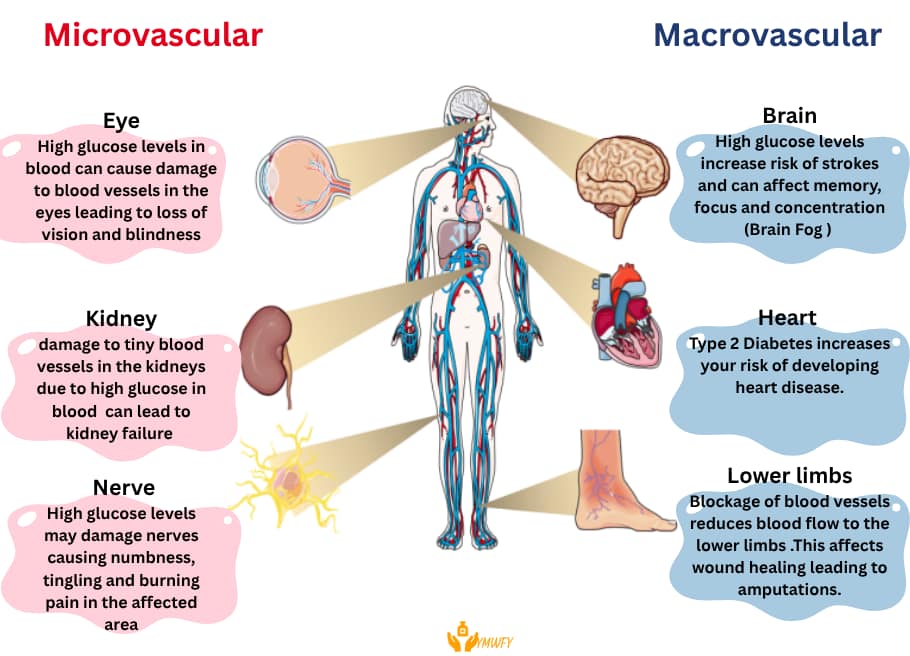
High blood sugar causes damage to both small and large blood vessels in the body. Damage to small blood vessels , referred to as microvascular damage leads to kidney disease (nephropathy),eye disease (retinopathy ) and nerve damage (neuropathy).
Strokes, heart disease and amputations are caused by macrovascular damage or damage to large blood vessels. Damage is commonly caused by a fatty deposit build -up in the blood vessels, resulting in reduced blood flow to the brain ,heart and lower limbs. Restricted blood flow to the lower limbs affects wound healing leading to amputations.
Goal of treatment in Type 2 Diabetes
Prevention of complications and delaying worsening of already existing complications is the main goal of treatment in type 2 diabetes management. Most people diagnosed with Type 2 Diabetes present with complications at time of diagnoses.
Studies show a link between HbA1c and microvascular complications. A high HbA1c value ,indicates increased risk of developing complications.
Adults living with type 2 diabetes are 2-4 times more likely to die from heart disease when compared to those without the condition. Majority of people with type 2 diabetes have elevated blood pressure and cholesterol levels .
Managing (Hb)A1c,blood pressure and cholesterol ,what we call the ABCs of Type 2 Diabetes plays an important role in preventing and delaying worsening of heart related complication.
What to aim for in blood glucose control.
HbA1c is considered the gold standard in diabetes management and care ,and tells a story of what was happening with blood sugar control over a period of 3-months .
HbA1c is influenced by both Fasting Plasma Glucose (FPG) and Post Prandial Plasma Glucose (PPG) .PPG measures blood glucose levels 2 hours after the completion of a meal, while FPG measures blood glucose in the morning before breakfast.
Studies report a strong link between PPG and HbA1c, suggesting that PPG plays a bigger role in reducing HbA1c than FBG. Achieving target PPG levels does not only lower HbA1c,but has been shown to reduce risk of heart related complications.
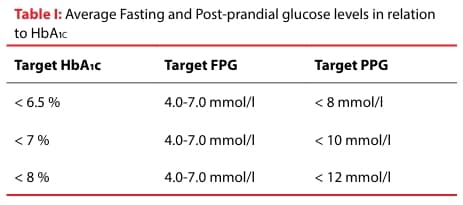
Table 1 below shows FPG and PPG targets with corresponding HbA1c goals. For example, an individual with an HbA1c target of 7% should aim to achieve a PPG value below 10 mmol/L and an FPG value between 4–7 mmol/L as their daily glucose target.
Tips for achieving blood glucose targets
Adherence to treatment, diet and exercise all play a vital role in achieving blood glucose targets. Self-Monitoring Blood Glucose (SMBG) using a glucometer, is a valuable tool that people living with diabetes can use to help them achieve HbA1c targets.
SMBG enables the person living with diabetes to understand how lifestyle , everyday food choices and activities affect blood glucose control, while helping them keep track of their FPG and PPG levels.
Regular check-ups and monitoring help identify complications early. All individuals living with diabetes should have their eyes ,feet and kidneys checked annually. HbA1c and cholesterol levels should be monitored every 3-6 months depending on how well the individual is doing on treatment, while blood pressure should be monitored at every clinic or doctor visit.
| Check-up | Frequency |
| Eyes | Annually |
| Feet | Annually |
| Kidneys | Annually |
| HbA1c | 3-6 months |
| Cholesterol | 3-6 months |
| Blood Pressure | At every doctor or clinic visit |
Achieving HbA1c targets by managing FPG and PPG together with regular screening can help prevent and delay worsening of already existing complications.
Contacts us for help and support with achieving your Blood Glucose Targets.
Pingback: Empowered living: Mastering Self-Care for Type 2 Diabetics. – Your Medication Working For You