History of Diabetes
The history of diabetes can be traced back to ancient times where Arabs, Chinese, Egyptians and Indians described signs and symptoms of the disease. The symptoms included weight loss, excessive thirst and urination. They reported the urine to be sweet as if mixed with honey.
It was in the 2nd Century AD that Aretaeus a Greek physician introduced the term diabetes. The term means to pass through, referring to the amount of water being taken, and urine being passed out. In the 17th century Thomas Willis added the term Mellitus meaning sweet as honey, referring to the sweetness of the urine. It was only in the 18th century that an English physician by the name of Matthew Dobson proved the presence of sugar in urine. He boiled urine until it was dry and noticed that the remains had the taste of brown sugar.
A breakthrough in understanding diabetes came through in the 19th century. Dr Claude Bernard discovered the role the liver plays in glucose control. In 1890 Dr Joseph von Merring and Dr Oscar Minkowski showed that dogs who had their pancreases removed, had the same symptoms as people who had diabetes.
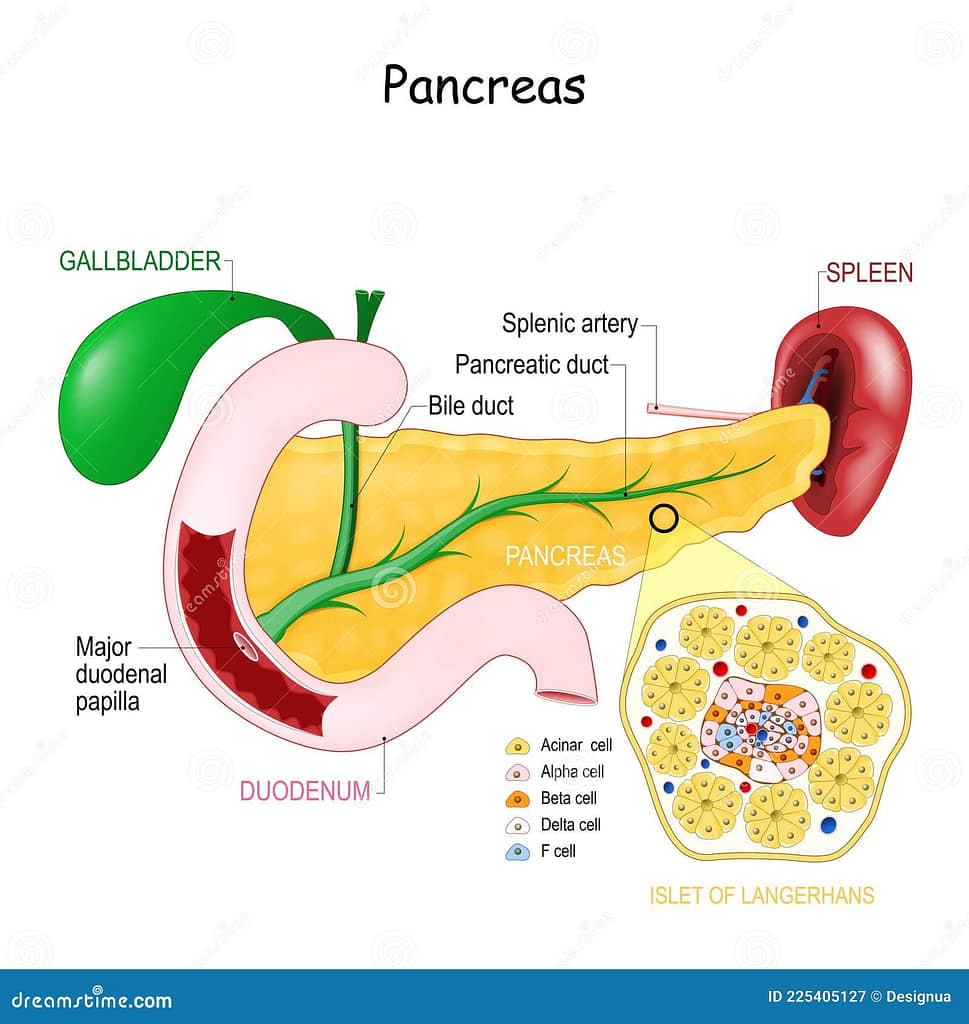
In 1900 Dr Eugene Lindsay Opie noted that the pancreas of diabetic patients appeared normal except for the cluster of cells called the Islet of Langerhans they were shrunken. Dr Moses Baron observed on an autopsy of a patient whose pancreatic duct had been blocked by kidney stones, that even though the acinar cell died the Islet of Langerhans remained intact. This was in line with an experiment done by Dr Leonid Ssobolew in dogs where the Islet of Langerhans was not affected after cutting of the pancreatic duct.
Eureka
In 1921 Dr Frederick Bantin preparing for a lecture on the pancreas reviewed the work of Merring and Minkowski, together with that of Baron, and Ssobolew. On his notebook he scribbled
“Diabetus [sic]. Ligate pancreatic ducts of dog. Keep dogs alive till acini degenerate leaving islets. Try to isolate the internal secretion of these to relieve glycosurea [sic].”
He proposed that a purified extract from the Islet of Langerhans be used to treat diabetes and not the extracts from the whole pancreas as was done in previous experiments.
Marjorie comes to life !
In May of 1921 he started working on this. He tied the pancreatic duct of dogs, and a few weeks later removed the dying pancreas and collected the extract. The extract was injected in Marjorie a dog whose pancreas had been removed earlier and was already sickly. Marjorie came to life and her sugar dropped. The control of Marjorie’s sugar was temporary as her sugar started going up again. Bantin realized that he needed more.
At that time, farmers were known to impregnate cows to increase their weight for the market. The embryos would be thrown away. An earlier report had suggested that the pancreas of foetal or new born animals had more islet of Langerhans cells.
Dr Bantin approached the farmers and purchased those embryos and lucky for him cow Islet of Langerhans worked. The extract was later named insulin, meaning island in Latin.
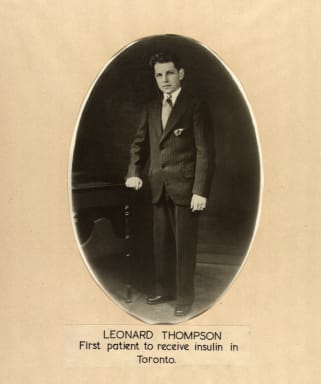
In January 1922 Leonard Thompson a 14-year old boy dying from diabetes became the first patient to receive injectable insulin.
Pingback: The Story of Type 2 Diabetes: From past to present – Your Medication Working For You
Pingback: Meet the Biguanides – Your Medication Working For You
Pingback: A guide to understanding different insulin types. – Your Medication Working For You
Thank you Mbali for this background, I did not know about this after 10years of practice as a pharmacist