Introduction
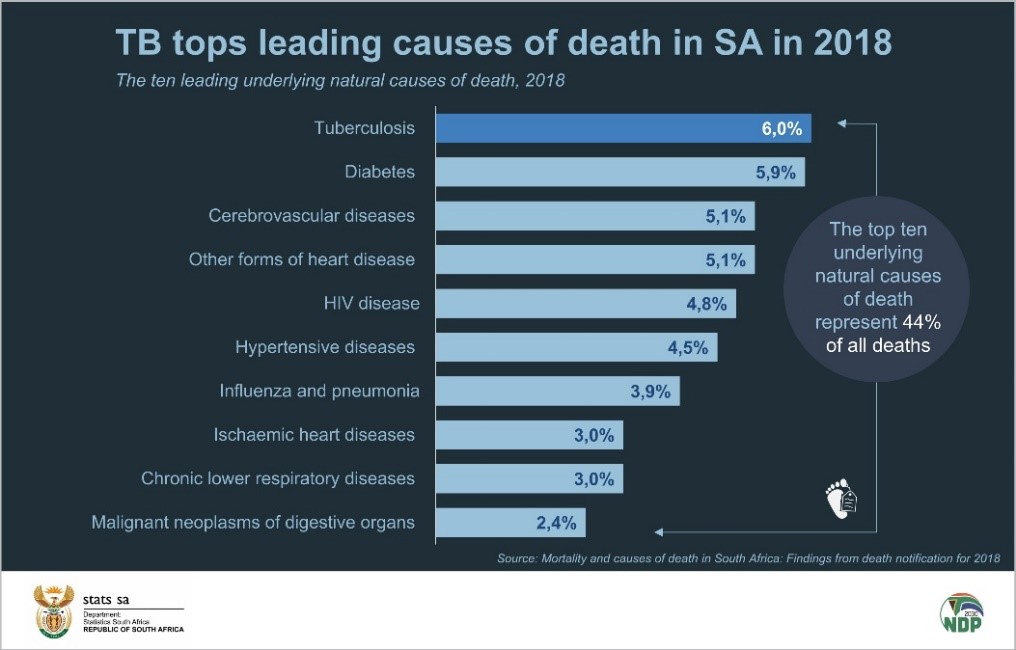
Diabetes is the second leading cause of death in South Africa. In 2021 there were over 4 million South Africans living with diabetes. This number is expected to reach 5.4 million people by 2030. A health survey conducted in 2016 found that 67 % of South Africans were Pre-diabetic.
Pre- diabetes as a risk factor
Pre-diabetes is a condition that is diagnosed when your blood sugar levels are higher than normal, but not high enough for you to be diagnosed with diabetes. Being diagnosed with pre-diabetes puts you at higher risk of developing type 2 diabetes, and other heart related conditions when compared to those without the condition.
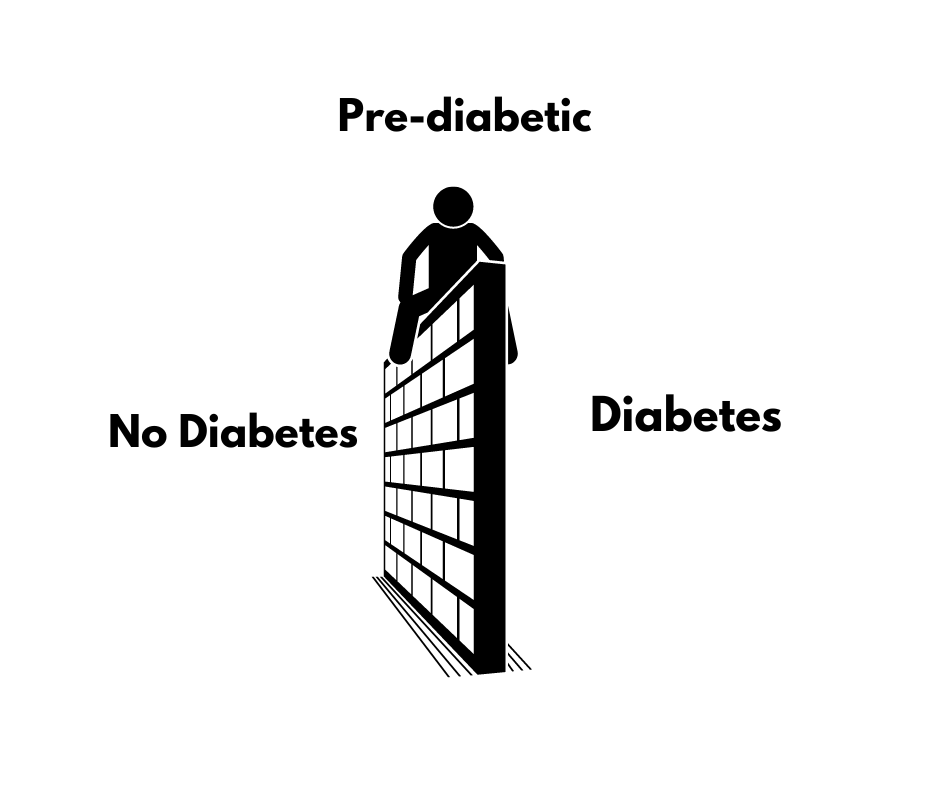
Prediabetes is like sitting on the fence between no-diabetes and diabetes
Those diagnosed with the condition often present with either Impaired Fasting Glucose (IFG) or Impaired Glucose Tolerance (IGT). Some individuals will present with both.
| Impaired Fasting Glucose (IFG) | Higher than normal blood -sugar in the morning before a meal. Fasting is defined as no food intake for at least 8 hours. |
| Impaired Glucose Tolerance (IGT) | Higher than normal blood-sugar after a meal. Your healthcare provider may give you a mixture of glucose and water. 2 hours after drinking the mixture your blood sugar levels will be taken. |
Pre-diabetes is a risk factor for diabetes. The condition does not normally have any signs and symptoms, and can be treated and reversed with diet and exercise.
Other risk factors
- Family history : Having a first degree relative ( parent, sibling or child) with diabetes increases ones risk of developing diabetes
- Lifestyle : You are at higher risk of developing diabetes if you are overweight or obese.
- Lack of exercise: Lack of physical activity contributes to obesity and increases risk of diabetes.
- Medical History : Certain medical conditions like high blood pressure, polycystic ovarian syndrome (POS), high cholesterol and history of heart conditions increases risk of diabetes.
- Age : Risk of diabetes increases with age. If you are over 40 you are more likely to develop diabetes.
Pingback: Postprandial Blood Glucose and its effect on HbA1c and heart health explored. – Your Medication Working For You