Glucose self-monitoring also referred to as Self-Monitoring Blood Glucose (SMBG) is an important part of diabetes management. As the term suggest, this type of monitoring is done by the individual living with diabetes at home. It helps one stay on track of their diabetes management and enables individuals to better understand how lifestyle and daily choices affect blood sugar control.
How often should you be testing?
In Type 2 Diabetes the decision regarding who should test, and how often is guided by type of treatment one is on. Individuals with diabetes being treated with oral medications only, do not require regular self-monitoring.
Self-monitoring for this group of individuals is recommended when they are first diagnosed with Type 2 diabetes, as part of their education about the condition. The aim of monitoring at this point is to help the individual gain awareness on how certain foods and activities affect blood sugar control.
Guidelines recommend that individuals on oral medications only, should test their blood sugar levels 2-5 times a week.
Individuals using insulin require regular self-monitoring. People who inject 2- 4 times a day need to test their blood sugar levels at least 3 times a day. While those who inject once a day need to monitor their fasting glucose once a day, this helps assess the effectiveness of their basal insulin.
What do the numbers mean?
Fasting Plasma Glucose (FPG) also knowns as fasting blood glucose is tested in the morning before breakfast. It measures amount of sugar in the blood after an overnight fast. Fasting is defined as a period of 8-12 hours without food or drink.
Postprandial Plasma Glucose (PPG) often referred to as postprandial blood glucose is measured 2 hours after the completion of a meal.
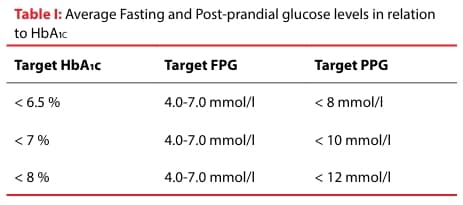
Fasting Plasma glucose (FPG) and Postprandial Plasma Glucose (PPG) both contribute to HbA1c levels. For most individuals living with diabetes, the target HbA1c level is 7%.
See table 1 below for recommended FPG and PPG targets corresponding to your individualized HbA1c goal.
Link between HbA1c and daily monitoring
HbA1c remains the gold standard in diabetes management, but because it is expressed as a percentage individuals often struggle with understanding and interpreting the results as they are used to blood sugar levels being expressed in mmol/L.
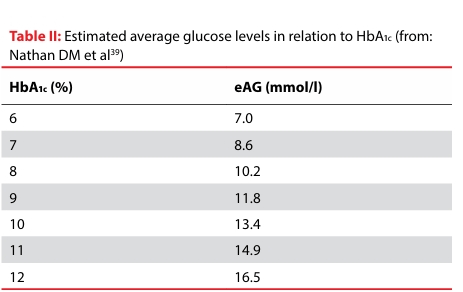
To assist patients and healthcare professionals in discussing HbA1c results, laboratories now report both the HbA1c and Estimated Average Glucose (eAG). The eAG value is calculated based on the persons HbA1c.It is an estimate of your average blood glucose level over the past 2-3 months.
This value helps highlight the relationship between HbA1c and daily monitoring readings as shown in table 2 below. An HbA1c of 8% indicates that for most of the time in the last 2-3 months , daily blood glucose levels were around 10.2 mmol/L.
Blood sugar levels can be affected by environmental changes and common life stressors. People with diabetes may need to increase the frequency of blood sugar monitoring during these periods.
Examples of situations that may require more frequent monitoring include illness, periods of poor glycaemia control e.g. during pregnancy or menstruation, when initiating new treatments, and in cases of hypoglycaemia.
Tips for self- monitoring
- Write down your results and note factors that may affect your numbers e.g. stress, illness or activity.
- Is your blood sugar too high or too low? Recognize a pattern and if your numbers remain out of range talk to your healthcare team or Contact us for help.
- Remember to be kind to yourself. Bad numbers DO NOT mean you are a bad person.
Pingback: Prevention of common Type 2 Diabetes complications – Your Medication Working For You
Pingback: Food and blood glucose control – Your Medication Working For You