Hypoglycaemia is a term used to describe all episodes of abnormally low plasma glucose concentration that expose an individual to potential harm. There is no single glucose value that can be used to define hypoglycaemia, as onset of symptoms differ from person to person.
Majority of those living with diabetes will experience symptoms associated with hypoglycaemia when blood sugar drops to a level below 3.9mmol/L. This value is referred to as the glucose alert value.
Signs and Symptoms
Common symptoms associated with hypoglycaemia include:
- Sweating
- Shaking or Trembling
- Heart beating faster
- Nausea
- Dizziness
- Extreme hunger
- Feeling weak and irritable
Types of Hypoglycaemia
Mild hypoglycaemia, as the name suggests ,presents with mild symptoms that may cause discomfort. The condition can be corrected by taking carbohydrates and following the 15-15 rule.
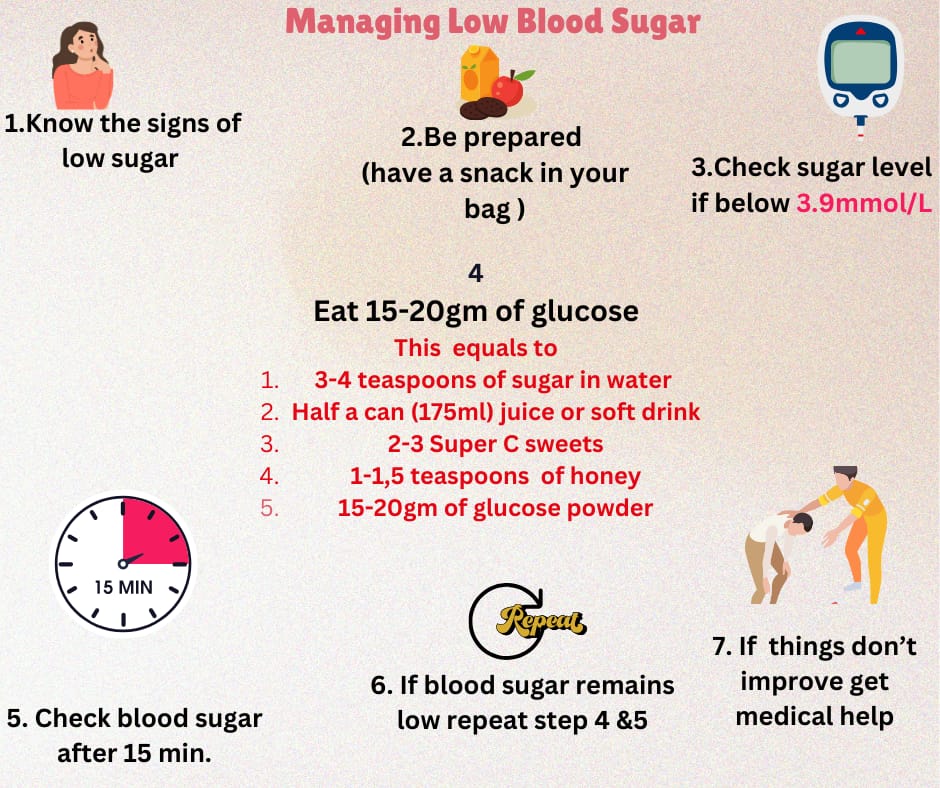
Nocturnal Hypoglycaemia happens at night during sleep. Symptoms associated with nocturnal hypoglycaemia include restless or irritable sleep, sweating, nightmares, increased heart rate and changes in breathing (suddenly fast or slow). Symptoms can be corrected by taking carbohydrates and following the 15-15 rule.
Severe hypoglycaemia can be life threatening and requires emergency medical attention. Individuals expiriencing a severe hypoglycaemic episode will struggling with their speech and vision and may appear disoriented and confused. The condition could lead to seizures, loss of consciousness and death. Treatment requires the use of a glucagon injection.
| Signs and symptoms of severe hypoglycaemia |
| Difficulty with speaking |
| Eye trouble (blurred or double vision) |
| Confusion and difficulty with concentration |
| Seizures |
| Loss of consciousness. |
If someone is having symptoms of severe hypoglycaemia do not give them food or drink as they may choke.
Who is at risk of developing Hypoglycaemia ?
Treatment induced hypoglycaemia is common in those using insulin or oral medications belonging to a class of medicines called sulphonylureas. Use of multiple glucose lowering medications and incorrect dosing of prescribed treatment increase risk of hypoglycaemia.
Individuals living with kidney disease and those with hypo unawareness are at higher risk of developing hypoglycaemia. Decreased food intake (missed or smaller than usual portions), increased exercise, and use of excessive alcohol increases risk of hypoglycaemia.
Management of Hypoglycaemia
Awareness and knowledge of signs and symptoms of hypoglycaemia is important for those living with diabetes. Mild hypoglycaemia can be resolved by following what is known as the 15-15 rule.
- At the onset of symptoms caregivers and individuals living with diabetes must check blood glucose levels to confirm hypoglycaemia (low sugar).
- The sufferer must be given 15-20gm of glucose. This equals to :
- 15-20 g of glucose powder or glucose tablets
- 3 to 4 teaspoons of sugar dissolved with a little water.
- ¾ cup or ½ a can (175 ml) of fruit juice or soft drink
- 2 to 3 Super-C sweets
- 1 to 1½ tablespoons (15 to 20 ml) of honey
- Wait for 15 minutes and check blood glucose levels.
- If still low take another 15-20 gm of glucose and repeat process until levels return to normal.
Management of severe hypoglycaemia differs from that of mild hypoglycaemia. Treatment requires the use of glucagon injection and should be handled as a medical emergency.
Hypoglycaemia can cause falls and injuries. It can have disastrous results for heavy machine operators, construction workers and drivers of public and heavy-duty transport vehicle.
Pingback: Meet the Biguanides – Your Medication Working For You
Pingback: GLP 1 Agonists – Your Medication Working For You
Pingback: A guide to understanding different insulin types. – Your Medication Working For You
Pingback: Meet the Sulfonylureas – Your Medication Working For You
Pingback: The ABCs of type 2 Diabetes and your Heart – Your Medication Working For You
Pingback: Self-monitoring in Type 2 Diabetes – Your Medication Working For You
Pingback: What are DPP4 inhibitors and how do they work? – Your Medication Working For You
Pingback: SGLT2 inhibitors – Your Medication Working For You
Pingback: The effect of alcohol on Type 2 Diabetes management. – Your Medication Working For You